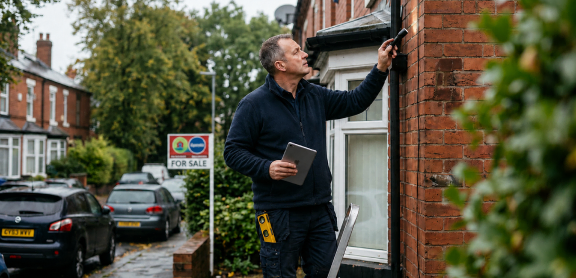
A house valuation helps you understand what your property could be worth in today’s market. Whether you’re planning to sell, remortgage, or simply want a clearer idea of your home’s value, it’s useful to know how to arrange a house valuation, what will happen during the appointment, and what you can do beforehand to make sure your home shows at its best.
In this guide, we’ll cover:
How to arrange a house valuation (online and in person)
House valuation tips and what to do before a house valuation
Questions to ask your estate agent on the day
Top House Valuation Tips at a Glance
Declutter and deep clean so your home feels bright, fresh, and spacious
Fix small issues like leaking taps, broken handles, or cracked tiles
Boost kerb appeal (front door, garden, driveway, bins out of sight)
Gather key paperwork for improvements (planning, warranties, service history)
Research local sold prices to sense check any valuation you’re given
Ask more than one estate agent so you can compare valuations and service
How to Arrange a House Valuation (Step-by-Step)
If you’re searching for how to arrange a house valuation, the process is usually straightforward.
1
Decide what type of valuation you need
The word “valuation” can refer to different services, depending on your situation:
Estate agent valuation (market appraisal): A pricing estimate to help you set an asking price when selling. This is usually free.
Mortgage valuation: Arranged by a lender during a mortgage or remortgage. It’s for the lender’s benefit (and is not a survey).
RICS valuation: A formal valuation carried out by aRICS-regulated surveyor and often used for legal or financial reasons.
Online valuation: A quick estimate based on local data. Useful as a starting point, but not tailored to your property’s condition.
2
Book your valuation (online or in person)
Many estate agents offer an online booking form where you can arrange a valuation in minutes. For the most accurate pricing, an in-person valuation is generally best, especially if you’re planning to list your home for sale.
3
Get 2 to 3 valuations if you’re selling
It’s common to invite two or three local agents to value your home. This helps you compare:
If you’re only selling, a free estate agent valuation is often the simplest starting point. If you need a formal, written valuation, a RICS valuation is usually the appropriate route.
What to do Before a House Valuation (Checklist)
If you want practical guidance on what to do before a house valuation, focus on helping the property look well cared for and avoiding unnecessary red flags.
Before your valuation appointment, aim to:
Tidy and declutter key rooms so they feel spacious
Deep clean kitchens, bathrooms, floors, skirting boards, and windows
Fix minor defects (handles, leaks, squeaky doors, cracked tiles)
Make sure key areas are accessible (loft hatch, meter, boiler)
Prepare improvement paperwork and service history
Note upgrades that may not be obvious, like insulation or rewiring
Preparing Your House for Valuation
There are several things you can do to improve how your home presents during a valuation. These house valuation tips won’t change the local market, but they can help your home show at its best and prevent avoidable value concerns.
Deep Clean
Deep cleaning is one of the most cost-effective ways to improve presentation. Estate agents often take photos as part of a valuation process, and you’ll want your home looking its best.
Focus on:
Kitchens and bathrooms
Floors, windows, and mirrors
Skirting boards, door frames, and light switches
Consider a Fresh Coat of Paint
If your décor is very dark, dated, or marked, repainting can make rooms feel brighter and more spacious. Neutral, light tones tend to photograph well and allow buyers to picture themselves in the space.
Fix Minor Repairs
Small issues can create doubt. You might see them as normal wear and tear, but buyers may worry they’re signs of bigger problems.
Prioritise:
Dripping taps or plumbing leaks
Cracked tiles and damaged flooring
Broken bannisters or handrails
Sticky windows or doors that don’t close properly
Replace the Right Items (and Skip the Rest)
Some replacements are mainly cosmetic, while others can improve buyer confidence.
Worth considering: fixing broken fittings, replacing very worn flooring, addressing poor ventilation, and ensuring essential features work properly
Be cautious with: purely decorative upgrades that don’t improve condition or function
Remove Unnecessary Items
Decluttering helps rooms feel bigger and makes it easier for an agent (and later, buyers) to see the space properly.
Remove:
Excess furniture
Old boxes and bulky items
Anything blocking light or walkways
If needed, you can temporarily store items with a storage company or use a house clearance service for larger pieces.
Find Trusted Surveyors for Your Property Valuation
Look at similar homes currently listed and how long they stay on the market
This makes it easier to understand whether a valuation feels reasonable and gives you confidence when discussing price.
What Do Estate Agents Look at When Valuing a House?
Some of the things an estate agent will look at when valuing your house include:
1
Comparable Sold Prices and Local Demand
One of the biggest influences is what similar properties have sold for nearby. Agents will compare your home against recent sold prices and consider current buyer demand in your area.
They may also look at:
Similar homes currently on the market
Competition at your price bracket
Whether properties are selling quickly or being reduced
2
Location and Size of Property
Property size is a key factor. Generally, more square footage can increase value, but layout and usability also matter. Outdoor space can also influence value, especially for families or buyers seeking parking.
Agents consider your proximity to:
Schools and catchment areas
Transport links
Local amenities
3
Condition of the Property
Agents assess internal and external condition. They look for issues that could lead to renegotiation later, such as damp, cracks, roof condition, and boiler age.
4
Rooms, Layout, and Outdoor Space
While square footage matters, many buyers still value bedroom count, bathroom count, and overall flow.
Agents will look at:
Room sizes and how usable the layout feels
Lofts, basements, conservatories, and garden space
Whether changes (like merging bedrooms) have reduced the home’s appeal
5
Any Improvement to the Property
Renovations can increase value, especially when they improve energy efficiency or add space.
Examples include:
Loft conversions
Extensions
Added bathrooms
Insulation and double glazing
Agents may also consider whether the work has the right paperwork and approvals.
6
Kerbside Appeal
First impressions matter. Agents consider the front door, roofline, window condition, and garden maintenance.
Simple improvements include:
Cleaning windows
Tidying paths and driveways
Moving bins out of sight
Repainting a tired front door
What to Expect at a House Valuation Appointment
A valuation appointment typically lasts around 30 to 60 minutes, depending on your property size and how many questions you ask.
An estate agent may:
Walk through your home and take notes
Ask about improvements and ownership (leasehold/freehold)
Assess room sizes, layout, and condition
Take photos (especially if you’re considering listing)
Discuss likely buyer demand and pricing strategy
You don’t need to accept anything on the spot. It’s fine to take time, compare valuations, and review fees before choosing an agent.
What comparable sold prices are you using to support this valuation?
Would you list at this price, or do you expect it to sell for less?
How long will it take to sell?
What are your fees, and what’s included?
How will you market my property (photos, listings, buyer database)?
How do you qualify buyers and handle viewings?
Valuation vs Survey: What’s the Difference?
A valuation (valuation survey) tells you what a property might be worth. A survey tells you what condition it’s in.
A mortgage valuation is not a survey. It is primarily for the lender and won’t usually identify defects like damp, roof problems, or structural issues in detail.
If you’re buying (or selling and want to reduce the risk of renegotiation later), arranging a survey can help you understand the property’s condition before you commit.
Find a Valuation Surveyor
We only work with RICS-regulated surveyors, ensuring they follow the RICS Red Book Valuation, which is the industry standard for valuations. At Konnect You, we can connect you with up to 5 valuation surveyors and help you save up to 70% on your Home Valuation costs. Simply fill out our quick surveying form and get started today. All our surveying companies have passed a strict verification process.