House Survey Cost: Level 1, Level 2 & Level 3 Prices

*Based on real prices from thousands of Konnect You users.
Tell us about what you need, then connect with surveying companies who can provide a Level 3 Survey.
Find surveyors
We’ve helped over 2 million people across the UK find trusted surveying companies, with users saving up to 70% on survey costs.

Find regulated surveyors who can help uncover defects early, before they turn into costly surprises after you buy.

Tell us what you need, and we’ll match you with companies that fit your needs, not just your postcode.

Read reviews from verified customers, check profiles, and get a clearer feel for each company before you choose.

"Excellent service provided by Merit Estates. Great communication, friendly and efficient. Would…"
Cath
Verified customer
"Excellent service, well worth the money. Checked everything in the house and a great report easy to…"
Ian
Verified customer
"Fantastic service received from Richard at BD surveyors. He was by far the cheapest quote I…"
Elliott
Verified customer
"Excellent service from start to finish. Didn't rush us to get one done, and suggested we wait until…"
Matthew
Verified customer
"Can't thank Rob enough, really helped me out. Was quick and gave me some helpful advice before…"
Danielle
Verified customer
"Competitive price and good communication. Report was thorough and well presented."
Fiona
Verified customer
"Prompt, efficient and highly detailed service."
Jenny
Verified customer
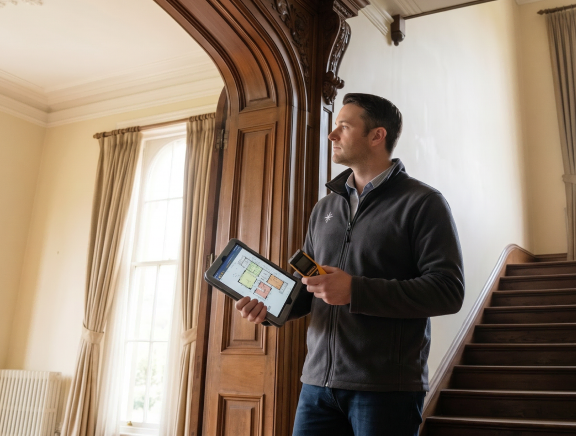
It’s the most detailed survey available under the RICS Home Survey standards and it’s often referred to as a Building Survey. The surveyor inspects the property and provides a detailed report on condition, defects, and areas that may need repair or further investigation. It’s designed to help you understand what you’re buying, especially when the property is older, altered, unusual, or clearly needs work.
A Level 3 survey covers the main building inside and out, focusing on construction, condition, defects, and risks. The surveyor will look at accessible areas such as walls, ceilings, floors, windows, roof coverings that can be viewed safely, loft spaces where access allows, and any permanent outbuildings where possible. You’ll also see commentary on issues like damp, timber condition, movement, and signs that repairs or further checks may be needed.
It is not a destructive investigation. Surveyors do not typically lift fitted carpets, move heavy furniture, cut holes, or dismantle services. They also do not run specialist tests on things like electrics, gas, plumbing, heating, drains, or asbestos unless you’ve arranged separate specialist inspections. If something can’t be inspected, or a specialist is needed, the report should flag it so you can act before you commit.
Read our full guide to the difference between a Level 2 and Level 3 survey for more detail.
A Level 3 survey is built for properties where a basic overview is unlikely to give you enough confidence to proceed. It’s most useful when the building is older, has been altered, has unusual construction, or shows signs of problems that could affect the cost and complexity of repairs. For listed homes there is the option for a listed building survey which is an even more in-depth inspection than a Level 3 survey.
It’s commonly chosen for:
If you’re buying a newer, conventional property that appears in good condition, a Level 2 survey may be enough for your needs.
Condition ratings help you prioritise what matters. They’re usually grouped from issues that need urgent attention, to items that need repair but are not urgent, to areas with no immediate repairs needed. The report may also flag parts of the property that were not inspected, and any documents the surveyor recommends you obtain. Use the ratings as a starting point, then focus on the surveyor’s explanation of cause, risk, and what to do next.
A Level 3 survey is detailed, but it’s still a visual inspection of what can be accessed safely on the day. Surveyors have to be clear about what they could not see, what they did not test, and where they are advising a specialist follow-up rather than guessing. That is why reports can read cautiously, even when the property is broadly fine.
The most useful way to read the report is to separate: what the surveyor has actually seen, what they are advising you to monitor, and what needs a specialist to confirm. If a section worries you, ask the surveyor to explain the practical impact, what evidence they saw, and what they would do next if it were their purchase.
The biggest house survey red flags are issues that suggest expensive, complex, or uncertain remedial work. People often describe these as the “money pit” risks because costs can escalate once work starts and more defects are uncovered.
Common themes to take seriously include:
If a report flags one of these, the best next step is not to panic or ignore it. Speak to the surveyor, ask what is urgent vs investigatory, and arrange any specialist checks they recommend before you become legally committed.
Answers to common questions about finding and choosing the best level 3 surveyors.
For a Level 3 Building Survey in the UK, expect to pay in the region of £574 - £894*, with an average of £656*. Level 3 survey costs will vary depending on the age, size, value, and location of the home.
*Based on the average service costs for Konnect You users. See how our data works.
Start by checking the surveyor is RICS-registered and that they regularly carry out Level 3 surveys. Then compare what’s included, such as the report format, whether photos are provided, and whether you can speak to the surveyor about findings after you receive the report. If the property is older, altered, or unusual, ask about their experience with that type of building and any common issues they look out for.
It depends on the property and the surveyor’s availability, as well as how long it takes to prepare the report. it is important confirm likely booking dates and report turnaround with the surveyor before you proceed. If you’re working to a tight buying timeline, raise it early so you can choose a surveyor with suitable availability.
Whatever house survey type you go with, make access easy. Especially for a Level 3 survey as the survey is only as good as what can be safely seen. Clear clutter from loft hatches, meter cupboards, and around obvious problem areas like damp patches or cracks, and make sure any outbuildings or garages can be accessed. If you’re the buyer, share your specific concerns upfront so the surveyor knows what to pay extra attention to during the inspection.
Use the report to create a clear action plan before you commit. Speak to the surveyor to confirm what is urgent, what needs specialist investigation, and what is simply maintenance. Then arrange any specialist checks recommended and share relevant points with your solicitor if the report flags legal or documentation concerns. For example if there are structural issues than you would need to arrange for a structural survey. We go in depth in our guide on building survey vs structural survey.
Once you have clarity, you can decide whether to proceed, renegotiate, or walk away based on evidence rather than guesswork.