The average cost of buying and selling a house in 2026 is £11,733.
This covers the essential services required in the moving process, though individual costs will vary depending on your circumstances. This figure does not include a house deposit.
If you're planning a move to London, Manchester or Bristol, our Cost of Moving House Calculator helps you budget for your next move and might help you find a few savings opportunities along the way.
What’s not always clear when moving house is that costs fall into two main categories:
One-time payments (like surveyor fees)
Ongoing expenses (like solicitor fees)
Some costs are fixed (like postal redirection), while others will vary based on your property's size and value (like estate agent commissions and removal services).
It's just as important to know when these fees need to be paid, as well as how much they will be, when planning your budget.
Cost of Buying a House
1. Stamp Duty
Stamp duty (SDLT) is a land tax in England and Northern Ireland that must be paid when purchasing a house priced above £250,000. The Land Transaction Tax has replaced Stamp Duty in Wales.
SDLT must be paid to HMRC within 30 days of completion of contract and will usually be handled by your solicitor.
There are five tax bands for SDLT which correspond with the purchase price of your property.
Property Purchase Price
Stamp Duty Rate
Payable Amount
Up to £125,000
0%
£0
£125,001 - £250,000
2%
£0 - £2,500
£250,001 - £925,000
5%
£2,500 - £36,250
£925,001 - £1.5 million
10%
£36,250 - £93,750
£1.5 million +
12%
£93,750 +
When buying a house in Scotland you will be subject to Land and Buildings Transaction Tax. This replaces SDLT and is applicable on all properties over £145,000. [14]
For comparison, you would have to pay £3,100 in taxes for a property in Scotland worth £270,000.
The three most popular house survey types available from the Royal Institution of Chartered Surveyors (RICS) are:
Level 1 (Condition Report) – A basic survey which provides a ‘traffic light’ rating for the overall condition of the property. It’s best suited for newer homes or flats.
Level 2 (Homebuyer Report) – A more comprehensive survey that provides an in-depth look at the property, but will not move any furniture or look behind any walls or floorboards.
Level 3 (Building Survey) – The most detailed and thorough survey, suited for older properties. Your surveyor will look for structural issues and include advice on how to address them.
3. Deposit
A 5% house deposit for the average UK property priced at £270,000 would be £13,500. [6]
Deposit amounts are generally 10%, but can sometimes be as little as 5% and as much as 65%. Your mortgage provider is likely to offer you better mortgage rates if you have a larger deposit.
Your house deposit is paid to your solicitor on the same day you exchange contracts. Once you do this, you are committed to purchasing the property and it is extremely difficult to break out of the contract.
4. Valuation Fee
The average valuation fee is £354.
A RICS Valuation Report is required by your mortgage provider to confirm that you are paying the right amount for the property.
Some providers offer a free valuation as part of their package, while others charge a fee based on the property’s value.
If a valuation is included in your home survey, you won’t need a separate one.
Property solicitors usually charge a set fee based on the value of the house.
Homebuyers should expect to pay more if they buy a leasehold property. This is because the paperwork involved with a lease can often be extensive and will need additional time to check.
The average solicitor fees for buying a freehold property are £1,518, while the average solicitor fees for buying a leasehold property are £1,844.
Solicitor Fees for Buying a House (VAT included)
Property Value
Avg Solicitor Fees for Buying
Up to £150,000
£1,417
£150,001 to £300,000
£1,483
£300,001 to £450,000
£1,961
£450,000 +
£2,270
As shown above, the solicitor's fee makes up a large part of the cost of moving house. It is important to take the time to find the right solicitor for you by doing thorough research, reading customer testimonials and using comparison websites.
Additionally, consider asking potential solicitors about their experience with your type of property (freehold vs. leasehold) and any hidden fees that might arise.
On top of the solicitor’s legal fees, homebuyers will also have to pay disbursements:
High-street estate agents will generally charge between 1% and 3% of the final property price on average.
Online estate agents work on a fixed-rate basis and are suitable for selling any type of property. Online agency rates start at around £300, but you will likely have to conduct viewings yourself.
2. Energy Performance Certificate (EPC)
Energy Performance Certificates cost between £60 and £120, depending on your local assessor's prices. Every house on the property market needs to be on the EPC register.
Your EPC reveals your property’s energy efficiency rating and whether it can be improved, based on the property type and the local area.
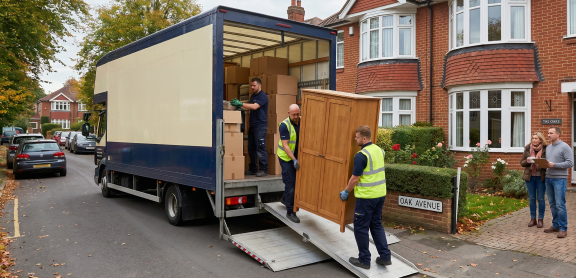
This cost includes dismantling and reassembling furniture, as well as moving packing services and materials.
The true cost of your house removals will depend on the volume of items, distance travelled and any extra services you need.
Removal Company Costs by Area
The average removal cost above is a useful benchmark, but costs vary by location depending on parking, access, and travel time. If you want a more accurate price, get specific costs from companies in your area.
This ensures that any mail sent to your old address is diverted to your new address. If you are moving with someone who has a different surname, they will also have to pay for redirection.
Length of Redirection
Redirection Cost*
Up to 3 months
£45.00
Up to 6 months
£66.50
Up to 12 months
£95.00
*based on one adult moving within the UK
3. Insurance
A Buildings Insurance policy will cost on average £241. [13]
You’ll need to get a home insurance policy when buying a new house. This is usually split into two categories, contents and buildings insurance. Buildings insurance will need to be bought before exchanging contracts.
How to Save Money When Moving House
While some of the prices included in this guide are fixed, most vary and can be negotiated with the provider.
The best way to save money on your move is to speak to multiple removal companies. With each of these companies, aim to get prices from at least three separate companies to find the best price. While price is important, keep an eye on the services being offered and remember to check third-party reviews from previous customers before signing any contracts.
Konnect You connects you with trusted companies suited to your move, so you can review your options, understand what is included, and choose with more confidence.
Life's big decisions deserve cost information you can trust. The figures in this guide are based on real prices received by thousands of Konnect You users. We review this data regularly to keep it accurate and up to date, so it reflects what people are really paying. Read more about how we get our cost data.