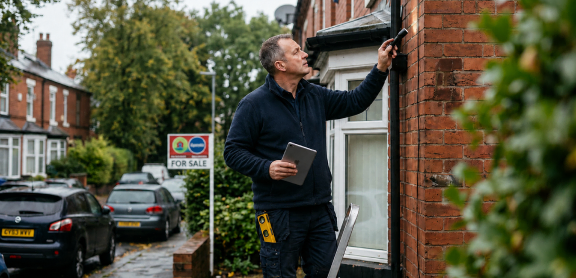
When buying a property, choosing the right type of house survey can save you thousands in unexpected repair bills. Most buyers don't know which survey they actually need, and with three RICS levels, as well as snagging surveys for new-builds, it can feel confusing.
This guide explains the different house survey types, how much they cost, what each one includes, and which survey you need when buying a house so you can move forward with confidence.
Why Do I Need a Survey?
A survey can provide a buyer with peace of mind about the home they want to buy. It can be the deciding factor in whether they continue with the transaction or they walk away.
Surveys can highlight a vast range of problems in the property that may not be obvious when you view the home. Hidden defects or developing problems could lead to much bigger and costly issues down the line. A chartered surveyor is trained to identify these concerns.
Issues found in a survey include (but are not limited to):
Asbestos
Damp
Subsidence
Structural movement
Major structural issues
Japanese knotweed and other invasive plants
Electrical issues
Woodworm and other insect infestations
Faulty drains and guttering
Roof issues
A survey can prepare a buyer for issues in the home, allowing them to budget and plan for work needed once they move in. For example, asbestos roof tile removal for a typical 3-bedroom semi-detached house could cost around £2,400 + VAT for the roof tiles only, before scaffolding or replacement roofing [1]. The survey report can offer maintenance advice and note if the home is of a safe standard.
It can also be invaluable when negotiating the price of the home. If issues are found - and they’re likely to be costly to fix - you can ask if the seller is willing to accept less. The seller will not receive a copy of the survey so it is up to you if you want to share the results with them.
A home survey is a professional inspection by a qualified RICS surveyor. The report highlights issues such as structural problems, damp, or defects that may be costly to repair. It gives buyers a clear picture of the property’s condition, helps with budgeting for repairs, and can support negotiations with the seller. The right survey level ensures you get the detail and reassurance needed for your specific property. If you live in a flat, read our guide on Do I Need a Survey When Buying a Flat.
Do You Need a Survey When Buying a House?
You're not legally required to have a survey when buying a house in England and Wales, but most experts strongly recommend it.
A survey helps you:
Spot issues early (damp, rot, subsidence, structural movement)
Renegotiate the price if repairs are costly
Ask the seller to fix problems before you exchange
Walk away altogether if the defects are too serious
Skipping a survey means absorbing all future costs yourself, even if the problems were invisible at viewing stage.
Types of House Survey
There are four main house survey types buyers choose from:
RICS Level 1 Home Survey (Condition Report) – Basic overview with traffic-light ratings. No repair advice or valuation.
RICS Level 2 Home Survey (Homebuyers Report) – The most popular survey. More detailed visual inspection, repair advice, optional valuation.
RICS Level 3 Home Survey (Building Survey) – Most comprehensive. In-depth analysis of structure, defects, risks and repair options.
Snagging Survey (for new-build homes) – Checks workmanship, defects and unfinished jobs so you can ask the developer to fix them.
RPSA surveys (Home Condition Survey + Building Survey) are also offered by some surveyors and sit broadly in line with RICS level 2 survey and RICS level 3 survey.
What Survey Do I Need When Buying a House?
Your ideal survey level depends on:
property age
construction type
visible condition
previous alterations
whether you're planning renovations
Modern, standard home in reasonable condition - Level 2
If you’re unsure deciding between a level 2 vs a level 3 survey, a RICS or RPSA surveyor can recommend the most suitable level once they know the property’s age, condition and structure.
House Survey Level Comparison:
Situation
Level 1
Level 2
Level 3
Very new home in good condition
✔
✗
✗
Modern, standard home in reasonable condition
✗
✔
✗
Typical older home (not heavily altered)
✗
✔
✔
I want repair & maintenance advice
✗
✔
✔
I want a valuation included
✗
✔ (optional)
✔ (optional)
Old, unusual or non-standard property
✗
✗
✔
Property has been heavily altered
✗
✗
✔
I'm planning major renovations
✗
✗
✔
I want in-depth structural insight
✗
✗
✔
RICS Level 1 Home Survey
The RICS Level 1 Home Survey (previously called a Condition Report) is the most basic and affordable option. It provides a clear overview of the property’s condition without going into detail.
What’s included in a RICS Level 1 Home Survey?
Traffic-light ratings showing the condition of different parts of the building
Highlights of significant problems and visible defects
Summary of risks to the building, people and local environment
Notes on legal considerations for your conveyancer
What’s not included?
Detailed investigation beyond visible defects
Repair advice or recommendations
EPC
Valuation or cost estimates
Best for: very new properties or standard homes in excellent condition.
RICS Level 2 Home Survey
The RICS Level 2 Home Survey (HomeBuyer Report) is the most common choice thanks to its detailed inspection at an accessible price point. It can support negotiations to reduce the purchase price.
What’s included in a RICS Level 2 Home Survey?
Everything in a Level 1 survey
Visual inspection of accessible internal & external areas
Checks for damp, rot, movement, insulation and drainage
Assessment of boundary walls and fences
Advice on repairs, maintenance and priorities
Cost guidance for urgent defects
Optional valuation & rebuild cost for an additional fee
What’s not included?
Checks on inaccessible areas
Specialist testing (gas, electrics, heating)
Examining leisure facilities (e.g., pools)
Best for: most standard, modern homes in reasonable condition.
RICS Level 3 Home Survey
The RICS Level 3 Home Survey (Building Survey) offers the most detailed assessment of a property’s structure and condition. This is different than a structural survey which is a specialised survey that offers in-depth investigation by a structural engineer focusing solely on the building’s integrity, foundations, and specific structural issues. Read more on our guide on building survey vs structural survey.
What’s included in a RICS Level 3 Home Survey?
Everything in a Level 2 survey
Full visual inspection including structure
In-depth defect analysis, causes and risks
Detailed repair options & timelines
Commentary on materials and construction
May include a repair schedule or rebuild cost
Optional valuation
What’s not included?
Intrusive tests
Asbestos & environmental testing
Planning permissions
Best for: older homes (50+ years), unusual builds, listed buildings, heavily altered or run-down properties, or planned renovations. For a more in-depth inspection for listed buildings there is a listed building survey which is a specialized inspection for architecturally significant properties, focusing on traditional construction materials and techniques.
Snagging Survey
Snagging surveys (snagging lists) are designed for newly built homes and assess build quality and finish.
What’s included?
Ensures the work meets building regulations & warranty standards
Highlights defects and incomplete work
Notes red flags or workmanship issues
Provides a snagging list for your developer
What’s not included?
Structural inspection
Specialist utilities testing
Valuation
Best for: new-build houses and flats.
How Much Does a House Survey Cost in the UK?
The more detailed the survey, the more expensive it is likely to be. This is due to the checklist of aspects a surveyor will look at. Keep in mind that this could save you considerable amounts of money in the long run.
Survey Type
Average Surveyor Fee
New Build Snagging List
£394
RICS Level 1 Survey
£380
RICS Level 2 Survey
£499
RICS Level 3 Survey
£656
Costs depend on property size, age, complexity and location.
Risks of Not Getting a Property Survey
When you buy a home in the UK, there is no legal penalty for not having a survey. As a result, buyers may decide to save money and skip having a survey altogether.
However, buying a home is likely to be one of the biggest purchases you will make in your lifetime. With this in mind, you will want to make sure your investment is sound.
1. Costly Repairs
Skipping a survey runs the risk of buying a home without knowing its true condition. You could end up with a home that is plagued with issues, costing you thousands in repairs. The cost of the survey is very likely to be less than the cost of remedial work required if the home has problems.
The average cost to rewire a 3-bedroom house is in the region of £4,500 - £6,500 [2]. In contrast, the average cost of a Level 3 survey is£656. The survey could highlight an issue like needing to rewire the home. This would allow you to budget, negotiate the price or pull out of the purchase.
2. Overpaying for the Home
Without a professional opinion on the true condition of the home, you could end up overpaying for it. Homes with defects and issues will be worth less than ones in good condition. If the home is priced without the consideration of potential problems, you could be paying more than it’s worth.
3. Safety Risk
In addition to the financial implications, you should also consider safety. A surveyor will be able to tell you if the property is structurally sound. They will also highlight any issues that need immediate attention. Without a survey, you could be putting yourself and your family at risk.
4. Negative Equity
Another risk is falling into negative equity. This happens when the home is valued at less than the remaining value of your mortgage. For example, if you buy a property with issues that impact its value, you could owe more on your mortgage than the home is worth. A professional opinion on the home could save you from buying a property that decreases in value.
Can You Get a Mortgage Without Having a Survey?
Yes, you can get a mortgage without having a survey. As we’ve mentioned, a buyer is not legally required, nor required for a mortgage, to arrange a survey. Arranging a survey is for the benefit of the buyer. This is something that should be considered whether you are using a mortgage or are a cash buyer.
More than likely, your mortgage lender will want to conduct their own valuation. This is to ensure their investment in the home (in the form of the mortgage) is secure. This is for their benefit and is unlikely to tell the buyer much about the home.
Is a Mortgage Valuation the Same as a Survey?
No. A mortgage valuation is not a survey.
It’s for the lender, not the buyer.
It checks if the property is worth the loan amount.
It won’t highlight defects, risks or repair costs.
You should always get your own independent survey.
How Do I Arrange a Survey?
Arranging a survey is usually a straightforward process so it’s recommended that you do so once your offer has been accepted. You can find surveyors by comparing local firms or asking friends and family for recommendations. If you are unsure which survey you need, you can discuss this when obtaining quotes from surveyors.
Once arranged, you will need to supply the surveyors with the address of the home. They can then organise obtaining access to the property, usually via the estate agent.
Choose your survey type
Get matched with up to 5 local RICS-regulated surveyors
Confirm access with agent/seller
Book and pay your surveyor directly
Receive your report in 3–7 days
Use findings to negotiate or request repairs
A surveyor can be found through recommendations, customer reviews or online searches.
You can review their prices, ask what is included in the survey and choose the surveyor who feels right for your property.
Every surveyor in our network goes through our verification process, including checks that they are RICS-registered. Surveyors offering snagging surveys may also be regulated by the RPSA.
What About Surveys in Scotland?
In Scotland, the seller must provide a Home Report before marketing the property. It includes:
A Single Survey (condition + valuation)
An Energy Report
A Property Questionnaire
If you’re buying an older or unusual home, you may still want your own Level 3 survey.
FAQs
A visual inspection of the property, checks for issues like damp or movement, assessment of roofs, walls, floors and boundaries, and a written report summarising condition, risks and recommended actions (varies by survey level).
Yes, a snagging survey is recommended to list defects for the developer to fix.
1 = no repair needed 2 = repairs needed but not urgent 3 = serious/urgent defects
How We Get Our Cost Data
Life's big decisions deserve cost information you can trust. The figures in this guide are based on real prices received by thousands of Konnect You users. We review this data regularly to keep it accurate and up to date, so it reflects what people are really paying. Read more about how we get our cost data.