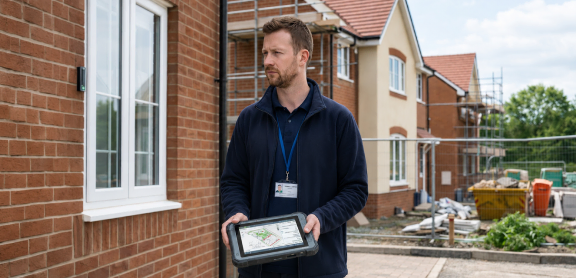
A Snagging Checklist is a list of defects found during an inspection of a new build home. While these properties should be flawless, rushed builds or poor workmanship can leave buyers with hidden issues.
What is a snagging survey? Although not mandatory, it’s strongly recommended as it can highlight anything from minor cosmetic faults to serious structural problems. Considering the relatively small cost of a snagging survey compared to the price of a new build, it’s a worthwhile step to protect your investment.
Think of it as the equivalent of a house viewing checklist for existing homes, giving you documented evidence to take back to the builder so issues can be fixed before you move in.
Walls and Ceilings
Is the plaster smooth and evenly applied?
Is the plasterwork neat and completed around sockets and pipes?
Are there any cracks in the walls and ceilings?
Are there any cracks in the walls and ceilings?
Is there any bowing evident in the ceilings?
Has the decor been finished to an acceptable standard?
Is the paint even and finished to a high standard?
Has the decor been finished to an acceptable standard?
Doors and Windows
Do the windows and doors fit their frames?
Are there scratches or cracks on the doors?
Are there trickle vents? Do these work effectively?
Is the glass free from paint, cracks and scratches?
Are the windows sealed effectively?
Do the handles on the doors and windows work?
Is there a draft from the windows?
Do bedroom windows comply with building regulations regarding fire evacuations?
Are external doors secure?
Floors
Are all the floors level?
Is there scratching on laminate floors?
Are there missing parts such as the skirting board?
Are missing parts or uneven flooring causing drafts around doors?
The best time to arrange a snagging survey is after building work is complete but before you move in. This gives your surveyor full access and prevents disputes about whether damage was caused by the builder or the homeowner.
In Scotland, this typically happens after the conclusion of missives. Some developers may not allow access until legal completion, but an early inspection is always preferable.
Having a snagging report ready before you move in strengthens your case if you need the builder to fix defects.
Will My Snagging Survey Find Faults?
Yes. The purpose of a snagging survey is to highlight snags so they can be raised with your builder. A qualified surveyor knows what to look for and can spot anything from poor workmanship to breaches of building regulations.
This can save you time, money and stress and help ensure your new build home meets the standards you’ve paid for.
Will Builders Fix Snags?
Yes, by law, housebuilders must fix reported issues within the first two years of completion under your new build warranty.
A snagging survey provides clear evidence of faults.
Reports from an RPSA or RICS surveyor carry more weight with developers.
With an NHBC Buildmark warranty, builders must address defects that breach technical requirements.
This means most snags should be repaired at no cost to you.
How Much is a Snagging Checklist?
The survey and subsequent report ('checklist') are around £300-£600 depending on the size and location of the home. Compared with the cost of a new home, the survey cost is a relatively small investment. Additionally, it could save you money on any corrective work. If found in the snagging checklist, it will usually be the builder’s responsibility.
Based on real prices from thousands of Konnect You users.
Find a Snagging Surveyor
Finding the right professional snagger is key. For example, a new build survey by a specialist snagging surveyor can uncover both minor cosmetic snags and serious construction issues.